Mid-Canada Line Site 12

This is a spot which has been on my list of places to explore for the last year or so. It’s an abandoned test facility for the Mid-Canada Line, a cold war era line of radar stations used for detecting aircraft. Notably aircraft flying towards North America over the Arctic. The Ottawa Valley had 4 sites set up to test the technology out. The Cliff Notes version is this: transmissions between each station in the line would be interfered with by any aircraft passing between them, thereby acting as a trip-wire of sorts to alert the military to the presence of an aircraft.

MCL Site 12 Top of Tower
Main Doppler dish on top of the tower.

The tower does have some tilt to it, but all of the guy wires are still attached. This thing was built to withstand 120 mph winds when fully kitted out, also while covered in 2 inches of ice. Should be up for a little while longer. According to the UAV, the top of the tower sits around 40m AGL.

MCL Site 12 Tower Overhead
Oblique view of the antenna arrangement. Top is the Doppler dish, middle 2 antennas are for receiving, and the lower antenna is a microwave dish.

Only the skeleton of the equipment building remains. Most of the sheet metal siding seems to be intact, just no longer attached to the building frame, and can be seen in the second image laying on the ground around the buildings foundation.

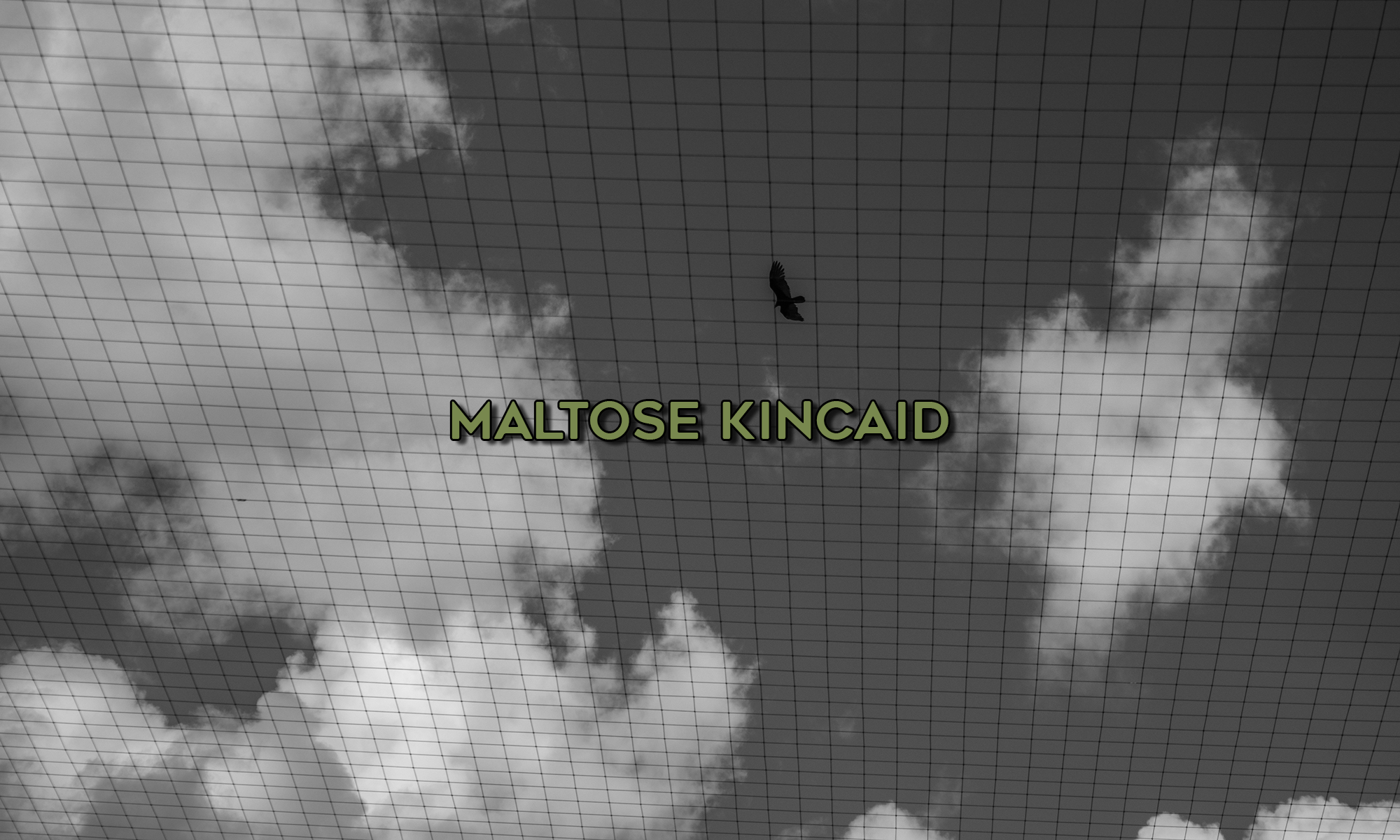
Flight 012 Mid-Canada Line Site 12 Test Fence
The view from 120 meters up. You can play “Where’s Maltose” with this shot.

This location does see quite a bit of foot traffic with all the footprints and vehicle tracks that were there on the morning I went. It was definitely worth the visit. I look forward to returning later in the year to get some updated shots during the warmer months.

Flying Monkey 03

Introducing the newest member of the Flying Monkey family. Picked up this Mavic Mini recently and have begun to put it through it’s paces. One thing to note is that the DJI Fly app for this UAV only supports phones and tablets running 64-bit OS’s, and the supported list of handsets is very limited.

Flying Monkey 03

Luckily I’ve got an older iPad running a 64-bit OS and could activate it through the app on there. Unluckily though, is that the included lightning cable for the controller is not long enough and the tablet can’t be mounted to the controller. I’ve got a longer cable and a tablet adapter on order to correct these issues.

On a whim, I decided to try connecting the drone/controller with some 3rd party software (Drone Harmony in this case) that I had installed for mapping purposes. Seems to be working as I’ve run 4 flights with it with no issues from my 32-bit phone. I think this may be due to DJI releasing an SDK for the Mavic Mini a few months back. Either way, it works and I’m happy with it. Just need to run with the proper overlap settings on my next outing.

Flight 004 Skate Park TEST
Completed orthophoto of a local skate park. Altitude was set to 45m to clear the trees/poles in the area. Despite the wind that had picked up, the UAV was able to do it’s job quickly.

Solar Box Project

During the summer, I started purchasing components for a solar box (solar generator). I am hoping to achieve 2 goals with it:

Firstly, I wanted to have a solar charger that I can charge all of my devices with while camping. There are commercially available chargers available, but they cost a good amount, and don’t usually have a power source built in. There is also the question of durability of some of the charge solutions. They are fairly light, thin and compact too which is handy for hiking, but I envision this as staying put once I get where I’m going.

Secondly, I also want to set up an off-grid simplex repeater at some point in the future and this is the first step towards making that happen. The main point of it being off-grid being that it can power itself, of course.

Solar Box Testing A
Initial Testing. Able to charge a power bank via USB with no issues.

This kit consists of a battery, a solar charge controller, a 12V socket, and the box.

I used a 7 amp, 12 volt sealed lead acid battery. I could’ve went either larger or smaller in capacity, but the most cost efficient was the 7A. The charge controller is rated to 20A, which leaves me some space to add another battery to increase the total amperage of the kit. The 12V socket is a dual socket and should come in handy for powering whatever radio I eventually end up using in the repeater and anything else that needs to be powered up alongside that. Lastly, everything is housed in a plastic .30 cal. ammo box. The battery and 12V socket are fused to prevent bad things from happening. Dead equipment is not good.

Solar Box Testing B
More testing.

A 25W solar panel is used to charge everything up. I went with this size because I want this to be running year round and there is usually less sun in the colder months and snow could also cause charging issues.

Solar Box Inside
A look at the guts. The charge controller readout will spike a bit higher than the panels max. output for a few seconds. Should only be reading ~1.4A max, not 1.6A.

The solar panel has a quick disconnect plug on it so I can pull everything apart for transport quickly. This ammo box is a temporary solution. This kit will eventually be built into a metal ammo can which will be necessary not only for durability in long-duration field conditions, but will also act as a ground plane for any antenna I decide to use for the repeater setup.

I was able to put some of my long-dormant electrical skills to use (if only some minor tinning and multimeter usage) with this project. The only thing I need to do now is to rig a switch to kill the power from the battery to the charge controller. As the panel has an LCD display, it does drain the battery if not in use.

Solar Box Under Sun
Doing it’s job under the sun.

Mont King Loop

Went for a hike on the Mont King Loop Trail in Gatineau Park a few weekends ago. The sun wasn’t out that day, and the colors weren’t as bright as they could’ve been, but it was still a very nice outing with good company. Here’s a few shots from the hike.

Hill_Mont King_Gatineau Park
The view from the Geodetic Monument Lookout.
Farm_Mont King_Gatineau Park
Farm located below the mountain.
Lac Black_Gatineau Park
Lac Black.
Mont King_Haze_Gatineau Park
Was a bit hazy earlier in the hike.

ARISS/NOTA ISS Slow Scan TV Event Feb 8-10

Every once in a while, the International Space Station has an SSTV event.  SSTV stands for Slow Scan Television.  Essentially you’re receiving data as an audio stream from the station (similar to old dial-up modem sounds) and then you can convert that data into an image using a computer or smartphone.  I used an app called Robot36 as the decoding app and another app called ISS Detector for determining when the station would be over my location.

I only found out about this event less than 24 hours before the end of it.  Ran outside just as the ISS was sailing overhead last night and was able to receive image 8 of 12 (Apollo 8 50th anniversary) by holding my UV-5R’s speaker mic up to my phone running Robot36.  As I had just downloaded the app a few minutes prior and didn’t have much of a chance to figure it out, I ended up losing the image when I closed the app (controls are a bit weird in the app).

I went outside again this morning ahead of when the ISS was supposed to be overhead.  I managed to catch the tail end of image 4 and caught all of image 5, but again screwed that up.  The app will auto-save the image at various times, but once it gets to the bottom of the screen, it will overwrite whatever came before it.  So I ended up losing the top where it says NASA On The Air.

All in all, it was pretty fun.

Captured images are below:
 

Camelbak Chute Repair

This has been my EDC bottle for the last year and a half. A few months ago I noticed that the strap that holds the small lid on had begun to wear through and a few days ago it broke. The lids still function as they should, just the smaller one is no longer attached when it’s open. I didn’t see much point in purchasing a new one so I decided to repair it instead.

There were two options available for repairing this lid: Cut the green cap retainer down and run a piece of paracord through it for retention or remove the retainer and attach the paracord directly to the cap.  I tried cutting the retainer down first but realized it fit’s the form of the top of the lid behind the cap and wouldn’t work.  It may have been alright if I inverted the retainer on the cap but I decided against that too as the knot in the paracord may still be too big for it. I kept the larger ring of the retainer under the main lid and cut it down so there would be no protrusions.

I removed the retainer and experimented with normal and gutted paracord.  I could’ve gotten a tighter knot with the gutted paracord but it didn’t feel like it had the same hold as the non-gutted piece.  If it ever slipped off, it would be more difficult to reattach the gutted cord again.

The non-gutted cord was looped around the gap where the retainer attached to the cap and tied with two overhand knots followed by another knot that I honestly don’t know the name of and then it was sealed with a lighter.

I wanted extra strength so I melted a small piece of scrap paracord into the entire knot assembly.  It doesn’t look pretty but should hold for awhile.

Lastly I tied the other end of the cord to the finger loop/handle on the main lid with a slipknot.  This allows me to adjust the length of the cord to better suit how I hold the cap out of the way when I’m drinking from the bottle.

With these repairs, I don’t imagine the lids should be much of an issue for the foreseeable future.